
The Legal Defensibility OS™ for Executive Leadership & Boards
We can't guarantee you're defensible. We can show you exactly where you're not — and guide you to close the gaps before an incident, regulator, plaintiff, board, or court asks why.
Defensibility.ai creates the decision-level record while the decision is being made — connecting the governing obligation, accountable executive, foreseeable harm, alternatives, threshold, rationale, approval, and proof of implementation.
▶ Watch the Explainer Video
What Defensibility.ai Does
One consequential decision. One accountable leader. One contemporaneous record that shows what was known, what was considered, who had authority, why the decision was reasonable, and whether the committed safeguards were actually implemented.
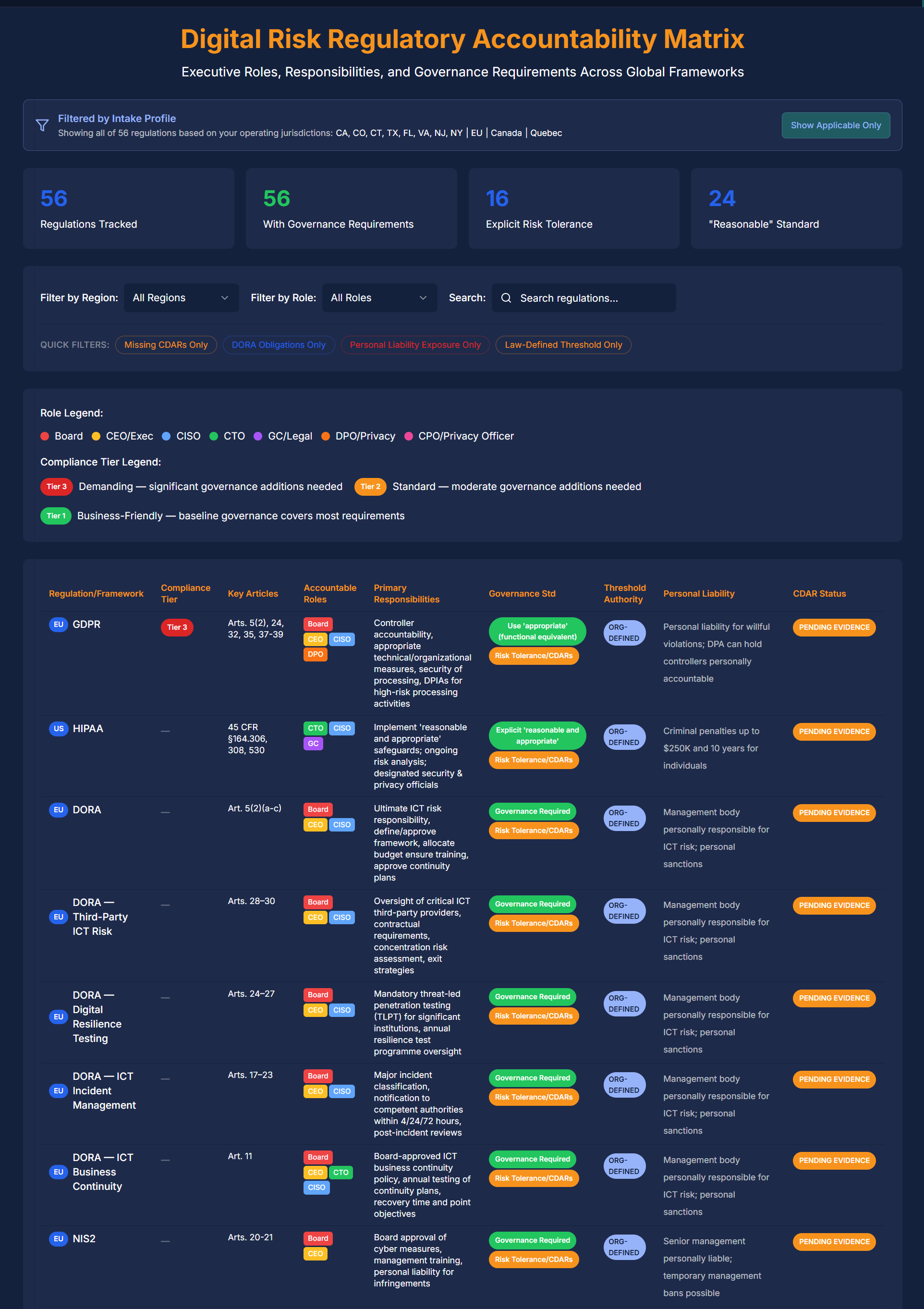
Decision-level accountability: legal obligations mapped to the leaders who own them.
The Defensibility Gap™
GRC, privacy, security, data governance, AI governance, audits, and outside advisors are necessary. But their artifacts do not necessarily preserve the decision-level record scrutiny reconstructs after something goes wrong.
Legal obligations are not consistently translated into named executive responsibility, authority, and required decisions.
Risk acceptance may be recorded without the alternatives, threshold, foreseeable harm, proportionality, and rationale behind it.
Leadership may approve safeguards without a linked record proving those safeguards were ultimately implemented and verified.
The Distinction
For Executive Leadership
Defensibility.ai maps enterprise obligations to the leaders accountable for them — so each executive can see the decisions, evidence gaps, and potential exposure tied to their role.
Oversight, risk appetite, authority, and whether leadership's judgment can withstand examination.
Whether the organization can produce a contemporaneous defense rather than reconstruct one after the fact.
Safeguards, escalation, thresholds, risk acceptance, and the rationale behind decisions made under constraint.
Materiality, disclosure, financial representations of known risk, and evidence tied to timing.
Lawful basis, proportionality, secondary use, and the judgment behind privacy obligations.
AI and agent deployment decisions that cross privacy, security, contractual, and human-impact boundaries.
Whether safeguards leadership committed to were actually built, deployed, and verified.
Thresholds, escalation, cross-functional governance, and whether accepted risk has an authorized rationale.
Research Foundation
The Defensible Governance Framework™ was built backward from enforcement and litigation outcomes — identifying the recurring questions regulators, plaintiffs, and courts ask when leadership judgment becomes the issue.
Authority before customer logos: the category thesis is grounded in enforcement patterns, legal-test methodology, and practitioners who have lived the problem firsthand.
Know Before Scrutiny Begins
Identify missing obligations, undefined thresholds, unmade executive decisions, implementation failures, and evidence gaps before somebody else asks for the record.